
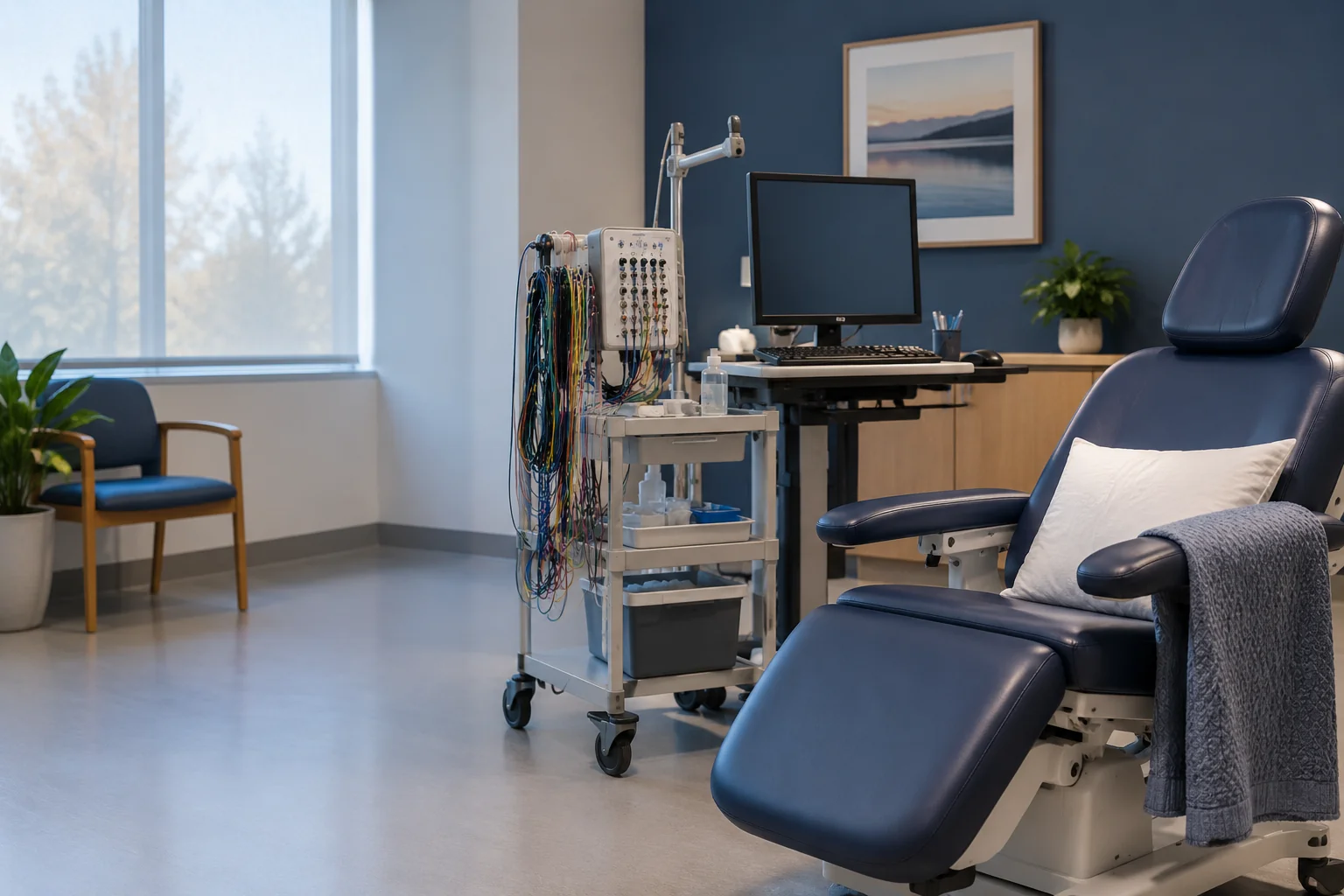
 (carepoint.1.2.0 - photographic 22)
Cardiac, Neurological, and Specialized Technologies
Cardiographic Technician
EKG technician
Obtains electrocardiograms and may support ambulatory monitoring or stress testing according to training and employer policy.
The work and its responsibilities
An illustrative work example
A patient arrives for an EKG. Preparation, a clear recording, and accurate identification allow the authorized clinician to interpret the test in the right context.
Actual duties depend on training, specialty, workplace, and applicable rules. Ask a working professional about the pace, physical demands, shift patterns, documentation, and less visible responsibilities of this role.
Education and verification
Short-term certificate or competency training within a broader clinical program.
What to verify: Exact skills taught, supervised practice, employer recognition, state rules, and the meaning of any private certification offered.
Ask for the exact entry requirements, supervised clinical arrangements, complete costs, and intended credential outcome. Verify eligibility with the responsible organization for your program, campus, delivery format, and intended state of work. Completion, examination eligibility, certification, and state authorization are separate questions.
Bring this question to the program
Ask which tests students practice, who supervises them, and how employers view the completion document or credential.
Cardiac, Neurological, and Specialized Technologies
Neurodiagnostic Technologist
END technologist
Records and monitors nervous-system activity through EEG and related studies used in epilepsy, surgery, sleep, and critical care.
The work and its responsibilities
An illustrative work example
A recording includes both physiological signals and possible interference. Careful setup, observations, and documentation help the interpreting professional understand the study.
Actual duties depend on training, specialty, workplace, and applicable rules. Ask a working professional about the pace, physical demands, shift patterns, documentation, and less visible responsibilities of this role.
Education and verification
Associate degree or structured certificate pathway.
What to verify: Programmatic accreditation, clinical competencies, ABRET eligibility, and employer expectations.
Ask for the exact entry requirements, supervised clinical arrangements, complete costs, and intended credential outcome. Verify eligibility with the responsible organization for your program, campus, delivery format, and intended state of work. Completion, examination eligibility, certification, and state authorization are separate questions.
Bring this question to the program
Ask about supervised studies, specialty exposure, recording quality, and the credential expected for the role.
Cardiac, Neurological, and Specialized Technologies
Polysomnographic Technologist
Sleep technologist
Conducts and monitors sleep studies used to evaluate breathing, movement, neurological, and sleep-wake disorders.
The work and its responsibilities
An illustrative work example
A sleep study continues while the patient rests. Technical monitoring, documented observations, and attention throughout the night are central to producing a useful record.
Actual duties depend on training, specialty, workplace, and applicable rules. Ask a working professional about the pace, physical demands, shift patterns, documentation, and less visible responsibilities of this role.
Education and verification
Certificate or associate-degree pathway.
What to verify: CAAHEP program status, BRPT eligibility, clinical studies, state requirements, and overnight-work expectations.
Ask for the exact entry requirements, supervised clinical arrangements, complete costs, and intended credential outcome. Verify eligibility with the responsible organization for your program, campus, delivery format, and intended state of work. Completion, examination eligibility, certification, and state authorization are separate questions.
Bring this question to the program
Ask about overnight clinical placements, study experience, and the state and credential requirements for employment.
Compare the work, then the education.
Roles within the same field can involve very different patient contact, scientific preparation, responsibilities, and working hours. Choose the specific occupation you want to explore before comparing school names or advertised program lengths.
Record your unanswered questions about clinical experience, total cost, credentials, and the state where you intend to work. Program Selection will help you turn those questions into a practical comparison and recognize education practices that deserve scrutiny.
Continue toProgram Selection